SOC 2 stands for “System and Organization Controls 2”, which is a compliance framework used to evaluate how well an organization protects customer data. SOC 2 compliance has quietly become the baseline security credential for SaaS / startup companies, cloud providers, and managed service organizations worldwide.
At RedSecLabs, we’ve helped numerous companies achieve SOC 2 readiness and successfully complete their compliance audits through our structured SOC 2 compliance services. Based on that experience, we’ve created this simple guide to answer the most common questions and remove the confusion around the SOC 2 compliance framework.
What Is SOC 2 Compliance?
SOC 2 is an auditing framework developed by the American Institute of Certified Public Accountants (AICPA) that evaluates how well your organization secures customer data. It is based on an independent audit conducted by a licensed Certified Public Accountant (CPA) firm accredited by the AICPA.
The goal of SOC 2 compliance is to demonstrate that your systems and processes meet high standards across five areas:
- Data security
- System availability
- Processing integrity
- Confidentiality
- Privacy
One important clarification before we go further: SOC 2 is not a certification. It does not result in a “certificate” or pass/fail badge.
Instead, what you receive at the end of a SOC 2 audit is an attestation report, which is a formal opinion issued by an independent CPA firm under the AICPA’s Statement on Standards for Attestation Engagements (SSAE 18). This report provides assurance to your customers that your controls have been independently reviewed.
What Is SOC 2 Based On? The Trust Services Criteria
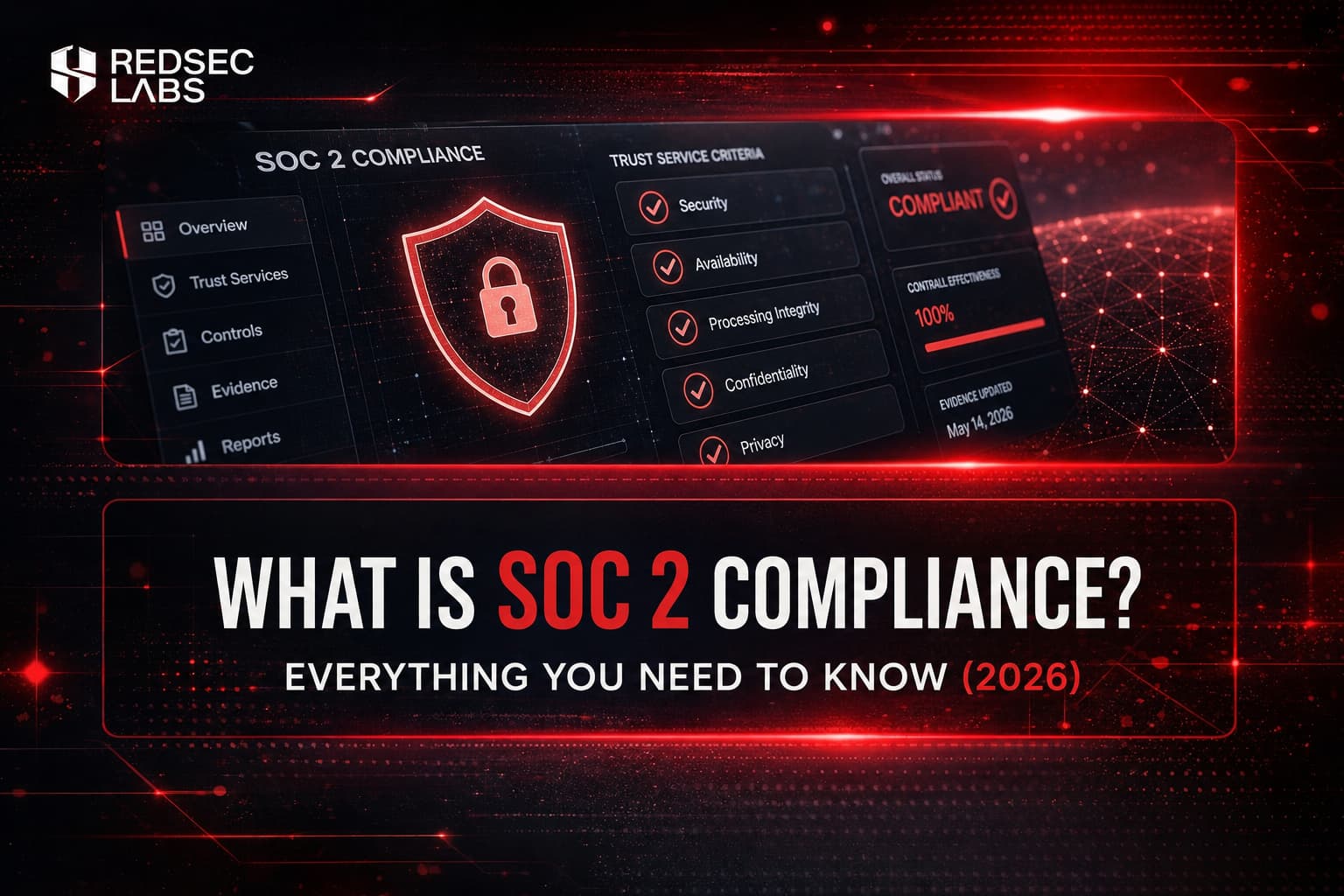
At the heart of SOC 2 are the Trust Services Criteria (TSC), formerly called the Trust Services Principles. These are the five categories your organization's controls are evaluated against during a SOC 2 audit.
The five criteria are:
Security. Protecting systems and data from unauthorized access. This is the only mandatory criterion included in every SOC 2 audit, and forms the foundation of all other criteria built upon.
Availability. Ensuring your systems are accessible and operational as promised in your service-level agreements (SLAs).
Processing Integrity. Verifying that data is processed accurately, completely, and reliably.
Confidentiality. Protecting sensitive business information such as trade secrets, pricing, and intellectual property from unauthorized disclosure.
Privacy. Governing how Personal Identifiable Information (PII) is collected, used, retained, and disposed of in line with your privacy notice and applicable regulations like GDPR, CCPA, and HIPAA.
SOC 2 Type 1 vs. SOC 2 Type 2
There are two types of SOC 2 reports, and most enterprise customers will ask specifically which one you have.
There is also a SOC 3 report, which covers the same controls as SOC 2 but removes sensitive details and is designed for public distribution, suitable for your website or marketing materials, unlike a SOC 2 which is shared only under NDA.
For a full comparison including costs, timelines, and which report is right for your organization, see our guide on SOC 2 Type 1 vs. Type 2.
Why SOC 2 Compliance Matters
Every compliance framework has a specific purpose and benefits. PCI secures payments, SWIFT protects financial messaging, HIPAA safeguards healthcare data. Each one solves a defined problem, and achieving them gives you advantages competitors often don’t have.
So, what benefits of SOC 2 compliance do you actually get?
Enterprise deal access: Enterprise buyers are very cautious about data breaches and vendor risk, so most won’t move forward without SOC 2. Once you have it, security reviews become much faster. Instead of long questionnaires and repeated explanations, your SOC 2 report often covers most of the security concerns upfront, especially around handling sensitive customer data.
Stronger security posture: To pass SOC 2 audit, you must fix gaps in areas like access control, monitoring, and incident response. The result is not just compliance, but better real-world security.
Easier regulatory alignment: SOC 2 compliance aligns well with frameworks like HIPAA, GDPR, and CCPA. It becomes a strong baseline instead of building separate systems for each requirement.
Competitive advantage: In SaaS markets, security often decides deals. When products are similar, SOC 2 signals maturity and reliability, and can be the deciding factor in winning customers.
What Happens During a SOC 2 Compliance Audit?
A SOC 2 audit is a structured process where an independent CPA firm evaluates whether your controls are properly designed and operating effectively over time.
Auditors first define the audit scope, including systems, processes, and personnel, with a mandatory focus on the “security” criterion. They then perform a risk assessment and move into evidence collection, reviewing key documentation such as security policies, access logs, and change management records. In most cases, around 60 to 100 controls are evaluated depending on scope.
Next comes the testing phase, where auditors perform walkthroughs, interview key team members, and verify that controls are functioning as described in real operations. This is where they determine whether controls are only properly designed (Type 1) or have been operating effectively over a defined period, usually 3 to 12 months (Type 2).
Finally, the auditor compiles a detailed report outlining findings and conclusions, including whether each control meets the required standard.
Now, it is important to know that auditors do not issue a “pass or fail”. Instead, they issue one of four opinion types:
- Unqualified opinion: your controls are well designed and operating effectively. This is the result most organizations are aiming for.
- Qualified opinion: your controls are mostly sound, but one or more areas fall short of the criteria. The auditor specifies which.
- Adverse opinion: your controls have significant deficiencies. A serious result that signals systemic issues.
- Disclaimer of opinion: the auditor lacked sufficient evidence to form an opinion.
An unqualified opinion is typically viewed as a clean “pass,” whereas qualified, adverse, and disclaimer opinions are considered modified results. Among these, adverse and disclaimer opinions raise the most concern for stakeholders.
How Long Is a SOC 2 Report Valid?
A SOC 2 report is usually valid for 12 months from the issue date. It doesn’t formally expire, but after a year it’s seen as outdated since it only reflects that period’s security controls. Most companies renew it every year to stay compliant and meet customer expectations.
Type 1 shows controls at a point in time, while Type 2 reviews how they worked over 6–12 months. Both need annual renewal to stay relevant. If there’s a gap between reports, a bridge letter is sometimes used for a short period, usually up to three months.
How Long Does a SOC 2 Take?
A SOC 2 Type 1 report usually takes a few weeks to up to 3 months to complete, as it evaluates controls at a single point in time. In contrast, a SOC 2 Type 2 report takes longer, typically around 6 to 12 months in total, because it assesses how effectively controls operate over a sustained period.
How Much Does SOC 2 Cost?
A SOC 2 audit cost depends on several components. A SOC 2 Type 1 audit typically ranges from $10,000 to $60,000, while a SOC 2 Type 2 audit is more expensive, usually between $30,000 and $100,000 or more due to the longer evaluation period.
A readiness assessment, which is done before the audit to identify gaps, usually costs between $5,000 and $20,000. Internal costs also vary significantly depending on how much staff time and effort is required to prepare for and maintain compliance.
Costs vary based on your organization's size, the complexity of your infrastructure, the number of Trust Services Criteria in scope, and the auditing firm you choose.
Who Needs to See Your SOC 2 Compliance Report?
Your SOC 2 report is a restricted-use document, but several stakeholders will request it:
- Current and prospective customers: evaluating your security posture before signing contracts
- Enterprise procurement and legal teams: conducting vendor security due diligence
- Business partners and resellers: assessing the risk of associating with your organization
- External auditors: auditing your customers' financial statements may require reviewing your controls
- Potential investors: needing credible evidence of your security maturity and organizational discipline
- Regulators: in certain industries, regulators may review vendor SOC 2 reports as part of compliance oversight
Because the report contains detailed information about your systems and control tests, most organizations require an NDA before sharing it.
Who needs SOC 2 Compliance?
While SOC 2 is voluntary, certain industries have made it functionally mandatory through customer and regulatory pressure:
Healthcare technology companies that handle sensitive patient data must meet strict security and privacy expectations aligned with HIPAA, and SOC 2 helps establish those controls.
Financial services and fintech firms, including payment processors and banking technology providers, are heavily scrutinized by both regulators and enterprise clients, making SOC 2 a baseline requirement.
HR and payroll platforms that process employee records, salaries, and benefits also need strong controls to protect confidentiality and data integrity.
E-commerce and retail technology companies handling customer payment information and personal data require SOC 2 to demonstrate secure data handling practices.
SaaS companies in general are one of the biggest groups where SOC 2 is expected, especially when selling to mid-market or enterprise customers as part of security reviews.
Startups, particularly those in early B2B stages, increasingly pursue SOC 2 early to unlock enterprise deals faster, build customer trust, and avoid security being a blocker during sales conversations.
How to Prepare for SOC 2
Preparation is where most of the work happens and where most organizations either succeed or struggle. Here's what a solid preparation process looks like.
1. Define Your Scope Carefully
Focus your audit only on systems that directly process, store, or transmit customer data:
- Production environment and application servers
- Databases containing customer data
- Third-party subservice organizations (cloud providers, monitoring tools, payment processors)
Exclude non-essential systems to keep scope tight and costs manageable.
2. Build Your Documentation Stack
The following policies and documents are required for virtually every SOC 2 audit:
- Information security policy
- Acceptable use policy
- Incident response plan
- Risk management policy
- Business continuity and disaster recovery plan
- Vendor and third-party management policy
- Data classification policy
- Privacy policy
3. Assign Clear Ownership
SOC 2 is a cross-functional effort. Assign clear responsibility:
- Compliance lead — coordinates the overall project and auditor relationship
- IT and engineering team — implements technical controls
- HR team — handles background checks, training programs, and onboarding/offboarding procedures
4. Collect Evidence Early
Don't wait until the audit window closes to start collecting evidence. Build evidence collection into your normal operations from day one of the audit window:
- Access logs and access review records
- Change management records and approval documentation
- Vendor compliance reports and SLAs
- Security training completion records
- Penetration testing reports and vulnerability scan results
For a step-by-step preparation guide, see our full SOC 2 Compliance Checklist.
Common SOC 2 Audit Mistakes to Avoid
Most SOC 2 failures don't happen because organizations lack security. They happen because of avoidable preparation mistakes. Here are the ones we see most often:
Over-scoping systems. Including every internal tool, test environment, and legacy system in your audit scope is one of the most expensive mistakes you can make. Each system in scope adds controls to implement, evidence to collect, and time to your audit. Define scope tightly around systems that directly handle customer data — nothing more.
Implementing controls right before the audit. Auditors for Type 2 reports evaluate how consistently your controls operated over the entire audit window — not just at the end. Controls stood up in the final weeks of an audit window raise immediate questions. Build them into normal operations at least 60–90 days before your window opens.
Treating SOC 2 as a documentation exercise. Writing a policy is not the same as operating a control. Auditors will test whether controls actually function in practice — through walkthroughs, staff interviews, and evidence sampling. A well-written incident response policy paired with zero evidence of it ever being used will not produce an unqualified opinion.
Starting evidence collection too late. Evidence needs to reflect the entire audit window, not just the final month. Access review records, change management logs, and security training completions need to be collected and organized from day one of the window — not assembled retrospectively under pressure.
Weak change management processes. Undocumented system changes are one of the most common sources of audit exceptions. Every change to systems in scope needs to be logged, reviewed, and approved through a defined process before the audit begins, not after.
Working with a SOC 2 Compliance Consultant
For many organizations, especially those doing their first audit, working with an experienced SOC 2 compliance consultant or SOC 2 compliance consulting firm is the fastest path to a clean report.
At RedSecLabs, we help SaaS companies and regulated organizations get SOC 2 audit-ready without delays or confusion. Whether you're a SaaS company navigating your first Type 1 audit or a scaling organization preparing for a Type 2, our team responds the same business day and scopes every engagement to your specific environment.
Contact us for a free consultation with a RedSecLabs security advisor for SOC 2 assessment services.
Frequently Asked Questions
Is SOC 2 compliance mandatory?
No. SOC 2 is a voluntary framework. However, many enterprise clients require it, making it practically essential for closing deals.
How to get SOC 2 compliance?
Start by defining your scope and selecting the relevant Trust Services Criteria. Then assess your current setup to identify gaps, implement required controls and policies, and fix any issues. After that, work with a CPA firm to perform the audit (Type 1 or Type 2). Many companies also use compliance tools or consultants to speed up the process and stay organized.
What to look for in a SOC 2 compliance consultant?
Look for experience with organizations of your size and industry, familiarity with your tech stack, and a clear process that includes readiness assessment, gap remediation, evidence collection, and auditor coordination.
How often do you need to renew your SOC 2?
There is no formal renewal. However, your report covers a specific time period, and most customers treat a report as current only if it covers the past 12 months. Most organizations undergo an annual SOC 2 audit to maintain a current report.
What is the goal of SOC 2?
The goal of SOC 2 is to give your customers independent, third-party proof that your company securely handles customer data using strong internal controls across security, availability, confidentiality, processing integrity, and privacy.
What is the difference between the NIST framework and SOC 2?
The difference between NIST and SOC 2 is that NIST is an internal cybersecurity framework for improving security practices. While, SOC 2 is a formal audit that provides third-party proof that your controls are working effectively.
What is a qualified SOC 2 opinion?
A qualified opinion is issued when an auditor finds that your controls are mostly sound but fall short in one or more specific areas. It is not a complete failure but it signals to any customer reading the report that gaps exist.
What is a SOC 2 readiness assessment?
A pre-audit check that finds gaps in your controls and policies so you can fix issues before the official SOC 2 audit. We at Redseclabs, do offer readiness assessment services too.
What are SOC 2 compliance requirements?
SOC 2 requirements are based on five Trust Services Criteria: security (mandatory), availability, processing integrity, confidentiality, and privacy. You need controls for access, monitoring, risk, incidents, and data protection.