As a UK-based enterprise cybersecurity consultancy firm, RedSecLabs has been recognized with some of the industry’s most trusted accredited, including CREST, PCI DSS QSA, ISO 27001, and has also been ISO UKAS.
Recently, we achieved another milestone: SWIFT CSP Certification. This certification reflects our commitment to helping financial institutions strengthen SWIFT CSP compliance, improve their SWIFT security controls, and reduce cyber risk across the SWIFT environment.
In this article, we will walk you through what this certification means, why it matters for the financial sector, and how it directly benefits our clients.
What Is SWIFT CSP and Why Was the Customer Security Programme Introduced
SWIFT (Society for Worldwide Interbank Financial Telecommunication) is a secure global messaging network that enables financial institutions to send and receive information about money transfers. Every day, over 11,500 institutions in more than 200 countries rely on SWIFT to move trillions of dollars safely.

For decades, SWIFT was considered one of the most secure financial networks. But in 2016, high-profile cyberattacks exposed serious vulnerabilities.
The most notable example is the Bangladesh Bank heist, where attackers used compromised SWIFT credentials to attempt fraudulent transfers totaling nearly $951 million. Alerts blocked most transactions, but roughly $81 million was successfully transferred and laundered.
In response, SWIFT launched the Customer Security Programme (CSP) in May 2016. Its goal: “Ensure that every institution connecting to the SWIFT network meets a defined set of cybersecurity standards.”
Understanding the SWIFT CSP Framework and Security Controls
The SWIFT CSP is structured around the Customer Security Controls Framework (CSCF), which defines the SWIFT CSP controls every SWIFT user must implement. These controls help financial institutions strengthen security across their SWIFT environment and reduce cyber risk. The CSCF is updated annually to reflect evolving threats.
Its three core objectives:
- Secure your environment. Isolate SWIFT systems from the rest of the IT environment. This includes network segmentation, critical data protection, and controlled physical and digital access.
- Know and limit access. Manage who can access SWIFT systems. Controls cover identity management, privilege control, and authorization procedures.
- Detect and respond. Even with preventive measures, incidents can occur. Institutions must log activity, detect anomalies, and respond quickly.
The controls within the CSCF are categorized as either mandatory or advisory.
- Mandatory: Non-negotiable, covering critical attack vectors like malware protection, credential management, and secure network configurations.
- Advisory: Best practices that reduce risk but are optional.
SWIFT Architecture Types
SWIFT environments can be deployed in different architecture types, depending on how an institution connects to the SWIFT network.
Common models include A1, A2, A3, and A4 architectures, which define whether the SWIFT infrastructure is hosted internally, managed by a service provider, or operated through a shared service bureau.
- Type A1: User owns communication and messaging interfaces.
- Type A2: User owns messaging interface; communication is external.
- Type A3: Uses SWIFT connector for application-to-application.
- Type A4: A2A connection hosted by a service provider.
- Type B: No SWIFT infrastructure; access via GUI/API.
Each architecture type has specific SWIFT CSP controls and security requirements, and understanding the architecture is an important step in any SWIFT CSP assessment.
Identifying the correct architecture helps institutions determine the scope of their SWIFT CSP compliance obligations and ensures that appropriate security controls are implemented across the SWIFT environment.
What Is SWIFT CSP Certification?
SWIFT CSP Certification is the formal, independent verification that an institution complies with the CSCF requirements defined under the SWIFT Customer Security Programme.
This certification sends a clear signal to SWIFT and the broader financial sector: the institution is committed to securing its SWIFT environment. It provides a structured framework proving that robust security controls are actively implemented and maintained.
Why SWIFT CSP Certification Matters for Financial Institutions
Financial institutions operate in a high-risk environment: large transaction volumes, cross-border operations, and constant exposure to fraud and cyberattacks. A SWIFT-related breach can cause financial loss, reputational damage, regulatory penalties, and months of operational disruption.
The importance of SWIFT CSP Certification goes beyond compliance. Here is why it matters in practical terms.
- Reduces insider and external threats: Mandatory CSP controls address vulnerabilities like weak access management and compromised credentials.
- Enhances incident response: Certification encourages robust monitoring and response procedures to mitigate potential security incidents.
- Builds counterparty confidence: Certified institutions inspire trust among correspondent banks and partners.
- Strengthens security posture: The assessment process highlights gaps that might otherwise go unnoticed.
- Supports regulatory compliance: Certification aligns with global cybersecurity standards, simplifying audits and reporting.
- Promotes cybersecurity culture: Implementing CSP controls engages staff and fosters organizational vigilance.
- Protects business continuity: Certified controls reduce the likelihood of operational disruptions and protect client trust.
What RedSecLabs’ Swift CSP Certification Means for Clients
RedSecLabs is now SWIFT CSP External Assessors and officially listed in the SWIFT Service Provider Directory. As a SWIFT CSP assessor, we can help financial institutions prepare for SWIFT CSP assessments, identify gaps in SWIFT CSP requirements, and strengthen overall SWIFT CSP compliance.
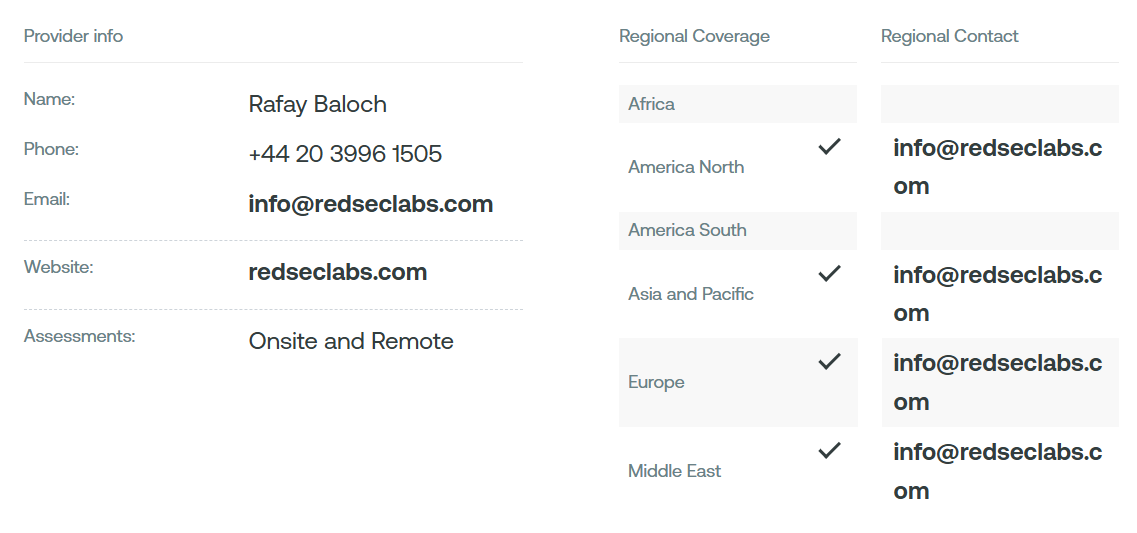
Our SWIFT CSP assessors are trained to meet the rigorous requirements of the Customer Security Programme Assessor Certification, reaffirming our commitment to maintaining the highest standards of security, transparency, and operational excellence.
For our clients in the financial sector, this has direct, practical implications.
You get an assessor who knows the framework from the inside. Having gone through SWIFT CSP Certification ourselves, we understand how the assessment process works, where institutions typically struggle, and what good looks like at each control level. This gives our assessments more depth and practical value.
We verify your controls against the CSCF:
- Access management
- Network segmentation
- Malware protection
- Incident detection & response
We can support your own SWIFT CSP Certification journey. Whether you are preparing for your first assessment or working to close gaps identified in a previous cycle, our team can help you understand the requirements, map your existing controls, and prepare for the independent verification process.
Our cyber risk and fraud assessments align with SWIFT standards. When we conduct risk assessments for SWIFT-connected institutions, our methodology now formally incorporates the CSCF requirements. This means your assessment results are directly relevant to your SWIFT compliance obligations, you are not doing two separate pieces of work.
You benefit from a credible, independent perspective. Our certification gives you confidence that when RedSecLabs assesses your SWIFT environment, we are working to a recognized standard. Our findings are not just advisory opinions. They are grounded in a framework that regulators and correspondent banks already recognize.
Conclusion
At RedSecLabs, earning this SWIFT CSP Certification means we are equipped to help financial institutions meet this standard with clarity and confidence. If your organization is preparing for a SWIFT CSP assessment or looking to strengthen SWIFT CSP compliance, RedSecLabs can support you with expert guidance and independent SWIFT CSP assessment services.
Reach out to learn how we can support your SWIFT security and compliance objectives.
Frequently Asked Questions
What is SWIFT CSP Certification?
Independent verification that a financial institution’s security controls meet SWIFT’s CSCF requirements.
Is SWIFT CSP Certification mandatory?
All SWIFT-connected institutions must attest to compliance. Independent certification is strongly encouraged and often expected by regulators.
How often must institutions undergo CSP Certification?
Annually, aligned with SWIFT’s yearly CSCF updates.
What is the difference between mandatory and advisory controls?
Mandatory controls are required; advisory controls are best practices that reduce risk.
What does RedSecLabs’ certification mean for clients?
It allows our team to assess your SWIFT environment against a recognized, independently verified standard, adding credibility with regulators and partners.
Can RedSecLabs help prepare for CSP Certification?
Yes. We help map controls, identify gaps, and support preparation for independent assessment.